An e-invoice is more than a document. It is data in motion.
Electronic invoicing moves structured, machine-readable invoice data between business systems for validation, exchange and processing.
Explore the relationships between supplier systems, formats, exchange routes, buyer systems and country rules.
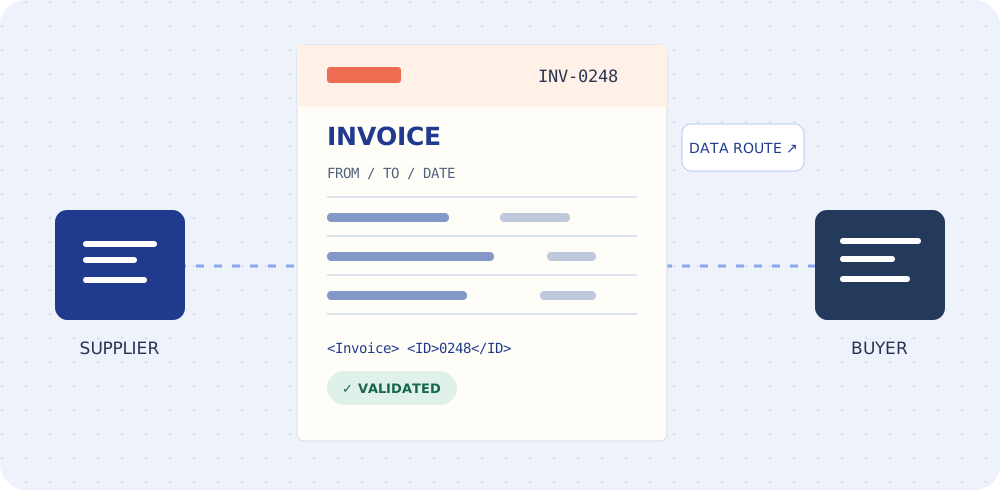
Follow the invoice, not just the file.
Each hand-off can affect whether the receiving organisation can actually process an invoice.
Create
Capture invoice information in a business system.
Map
Represent the fields in an agreed model and syntax.
Validate
Check structure, calculations and business rules.
Route
Send through the accepted channel to the recipient.
Process
Receive, match, reconcile and handle exceptions.
Find your starting point.
Move from the basic concepts to the systems and decisions that make an exchange work.
The visible invoice is only one layer.
Underneath a human-readable invoice are fields, references and validation rules. Reliable exchange depends on preserving their meaning as information passes between systems.
Guides for the next decision.
What is electronic invoicing?
The practical difference between sending a document and exchanging invoice data.
Structured invoice vs PDF
A visual document and a data object solve different parts of the invoicing task.
Invoice data fields and validation
Identify the data contract before choosing a transmission route.
EN 16931: a starting point
Understand the European semantic model without treating it as a universal country checklist.
How an invoice moves between systems
Trace the hand-offs from creation to acknowledgment and exception handling.
ERP integration checklist
A practical sequence for teams connecting invoice data and business workflows.